As explored in our previous post, AI-powered phishing techniques, including email phishing and deepfake scams, are becoming increasingly sophisticated. To counter these threats, we created the AI phishing template generator. This post explores how to use our new tool more effectively by concentrating on realism, ethical considerations, and prompt engineering.
To make the most of our AI-powered phishing template generator, read on.
Realism: The Foundation of Effective Phishing Simulations
AI has revolutionized phishing by enabling the creation of highly realistic fake websites, emails, and even multi-factor authentication (MFA) portals. For organizations pursuing Security Behavior Management through awareness and training, this realism is a double-edged sword. It ensures phishing simulations closely mimic real-world attacks, helping employees recognize and respond to threats. On the other hand, it raises the stakes for ethical considerations.
Using AI tools like our Engage platform allows organizations to create simulations that reflect the latest attacker tactics. For example, phishing templates can mimic fake invoices, payment requests, or compliance-related emails, depending on the organization’s specific risks. This level of customization ensures employees are trained to recognize the types of phishing attacks they are most likely to encounter.
Customizing Templates for Your Organization
Phishing simulations are most effective when tailored to the unique threats your organization faces. For example:
- Industry-Specific Threats: Healthcare organizations might focus on phishing emails exploiting HIPAA compliance, while financial institutions could simulate tax audit scams.
- Role-Based Scenarios: Executives might receive spear-phishing simulations, while customer service teams could be targeted with fake customer inquiries.
- Functional Groups: Using the Engage Phishing Simulation group feature group features, organizations can target specific departments or teams with relevant phishing scenarios, such as finance teams receiving fake invoice requests.
By aligning simulations with real-world risks, organizations can better prepare employees to recognize and respond to actual phishing attempts.

Ethical Considerations: Balancing Realism with Responsibility
Realism is essential in phishing simulations, while avoiding damage to employee trust. While security teams are sometimes tempted to simulate a phish about employee bonuses or executive salaries, the truth is that a simple Microsoft 365 password reset phish can be just as compromising to an organization as an email that could generate anxiety or resentment.
Overly aggressive simulations, such as those exploiting personal crises or mimicking sensitive situations can cause undue stress and backlash. For example, avoid impersonating individuals in ways that could create anxiety, panic or confusion. Instead, create simulations to highlight common red flags, such as unexpected requests for sensitive information or urgent financial transactions.
Maintain a balance between realism and ethical responsibility in the content of your simulations to foster a culture of trust while still preparing employees for real-world threats.

Prompt Engineering: The Art of Guiding AI
The success of AI-generated phishing simulations often depends on the quality of the prompts used to guide the AI. Effective prompt engineering involves crafting detailed, context-aware instructions that align with the organization’s training goals.
Here’s one example of a compelling and engaging prompt for generating a phishing simulation:
“Create a phishing email that uses recent product announcements to create a call-to-action for employees to boost our announcements on a business-oriented social media platform. Use layout elements that lend a professional look to the email.”
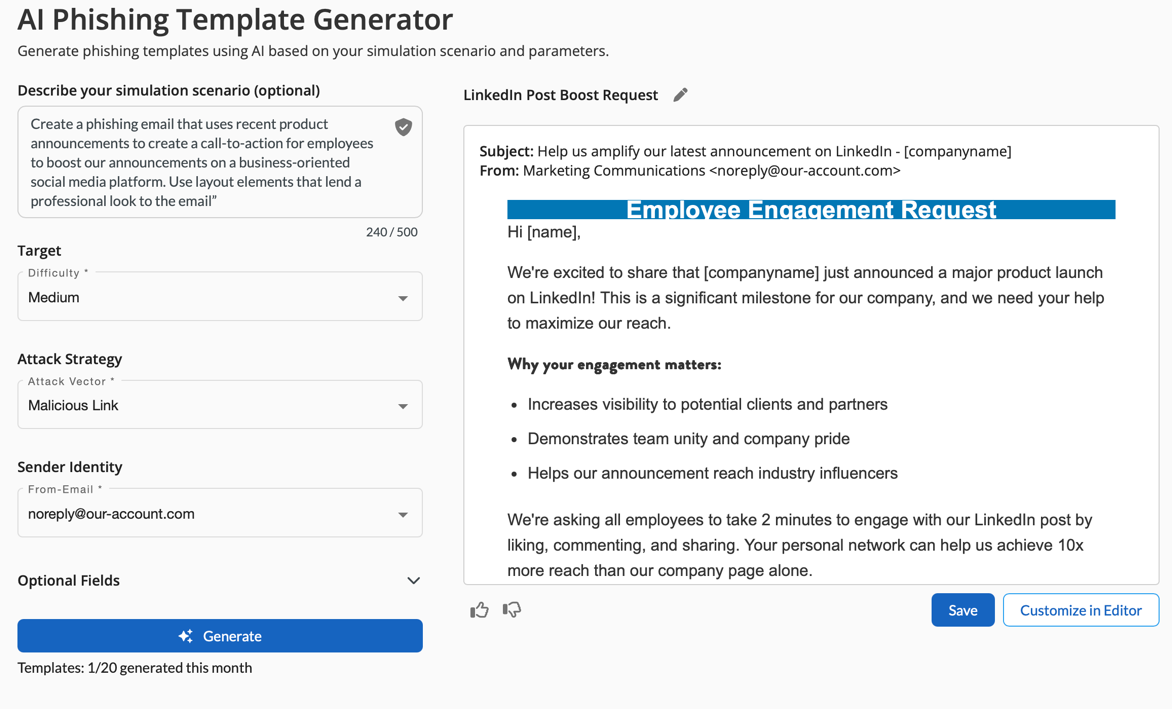
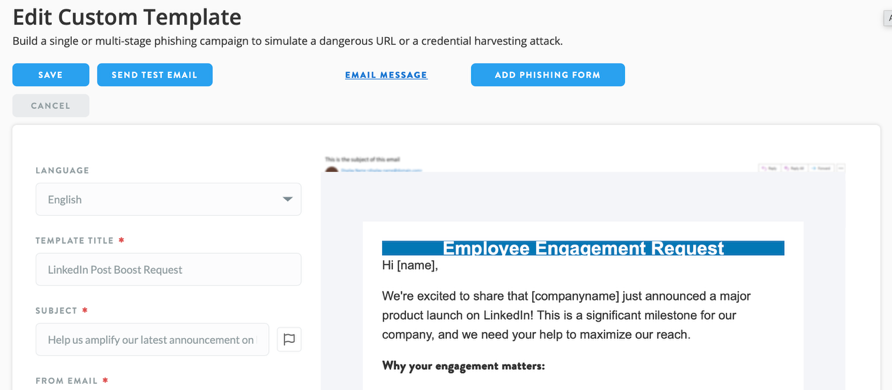
The AI template generator allows customization of the template that’s been created by your prompt, so you can insert your own elements or make adjustments as needed.
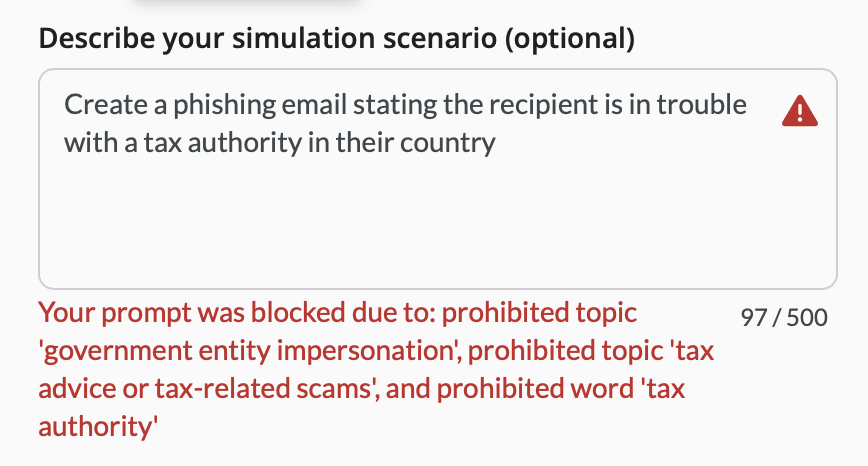
Avoid: Impersonation attempts or overly aggressive prompts can lead to ineffective or inappropriate simulations or potential legal repercussions, so we’ve implemented common-sense guardrails.
For example: “Create a phishing email stating the recipient is in trouble with a tax authority in their country”. In the example below, the prompt has been blocked by the template generator to avoid legal or business risks that could arise from impersonating certain entities.
Focus on clarity and professionalism; these attributes ensure organizations can deliver effective and appropriate simulations.

Use Results to Refine Future Efforts
Phishing simulations are not just about testing employees. Phishing sim exercises are about learning and improving. AI-powered tools like Mimecast’s Engage platform include features to measure employee responses, such as click rates, reporting rates, and time-to-detection. These insights can identify areas where employees need additional training and help refine future simulations.
Engage provides detailed insights into user behavior during phishing simulations. For example, the Watchlist Rules Manager is a great way to identify users who click on both real and simulated phishing messages. Engage tracks metrics like email opens, link clicks, and reports of suspicious emails, helping security teams evaluate campaign effectiveness and identify patterns.
To make this data actionable, Mimecast Engage offers visualization tools, highlighting high-risk individuals or departments. Detailed reporting features allow teams to share progress with stakeholders, refine training initiatives, and prioritize. For more information on how to leverage these features effectively, check out our guide on managing phishing campaigns in Engage.
By combining AI’s ability to generate realistic phishing scenarios with data-driven insights, organizations can create a continuous cycle of improvement in their security awareness programs. This approach not only prepares employees for the evolving threat landscape but also strengthens the organization’s overall cybersecurity posture.
Take a moment to try out the AI Template Generator and share your impressions, ideas, and requests in the comments below!